Sustainable waste management is no longer just a concept—it has become a necessity for households, businesses, industries, and communities. As cities continue to grow and consumption increases, the pressure on landfills and natural resources rises as well. This is exactly where the 7 R’s of Waste Management play a vital role. These seven principles help reduce waste at the source, conserve natural resources, minimize environmental impact, and promote a circular economy.
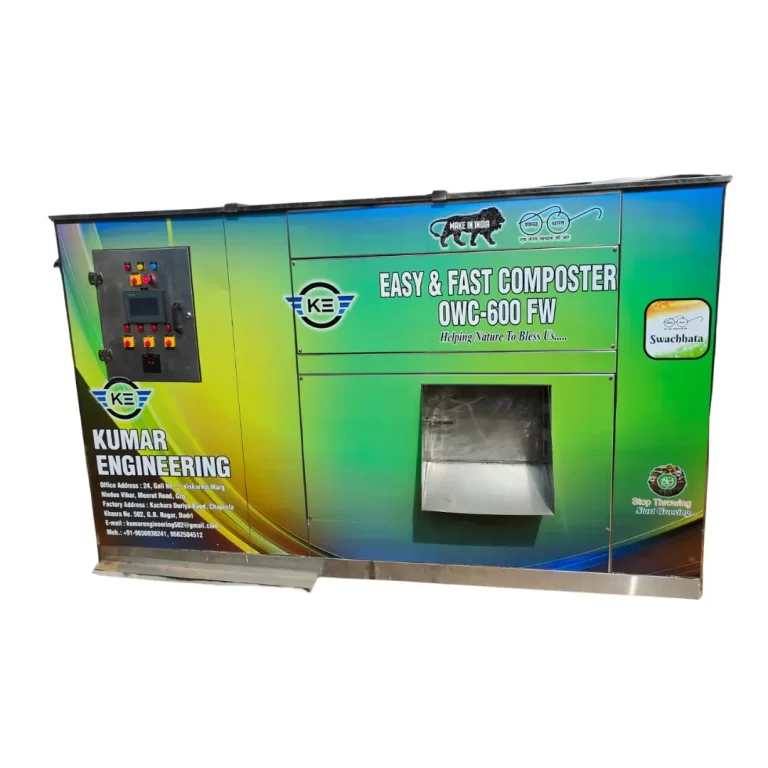
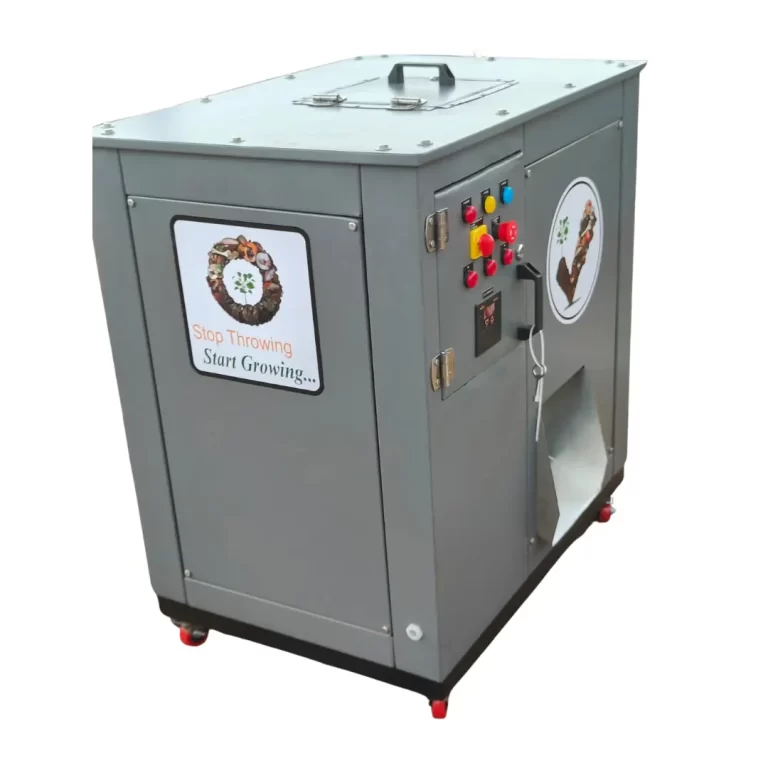
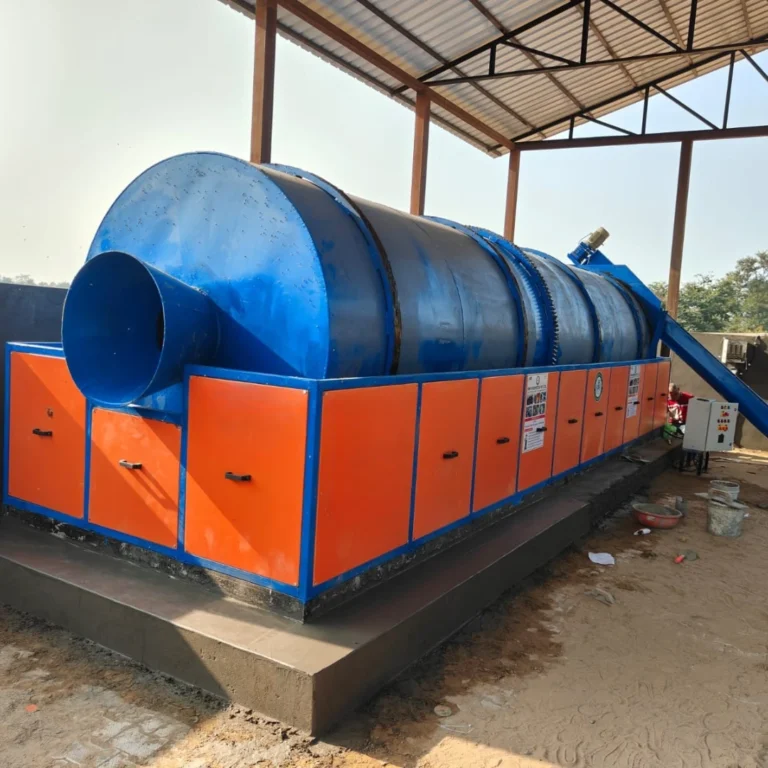
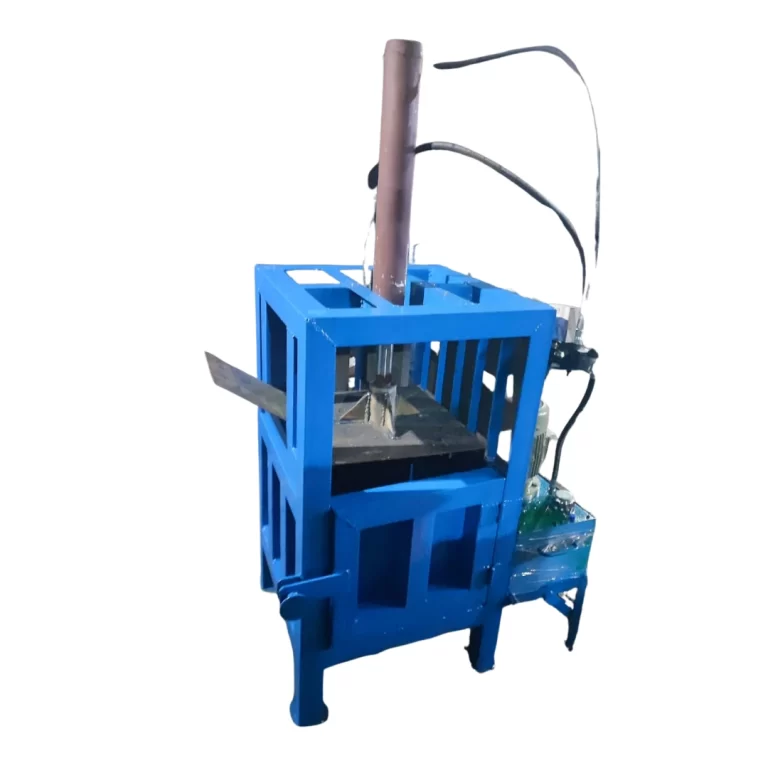
Among all sustainable practices, one of the most effective solutions is converting organic waste into useful compost. Companies like Kumar Engineering, a trusted manufacturer of advanced Food Composting Machines, are contributing significantly to this mission by offering efficient solutions to manage biodegradable waste in an eco-friendly way.
In this blog, let’s explore the 7 R’s of Waste Management, why they matter, and how individuals and organizations can adopt them to reduce their waste footprint.
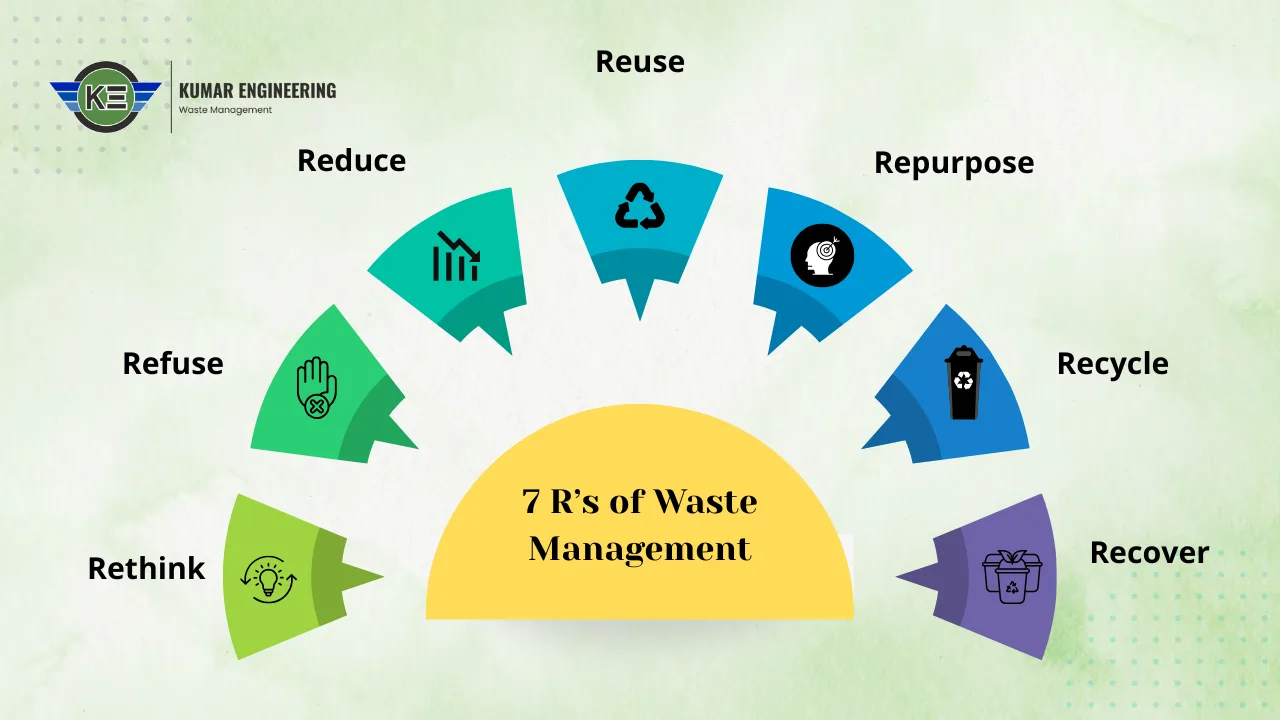
What are 7 R’s of Waste Management
1. Rethink – Change the Way We Use Resources
The first step toward responsible waste management begins with rethinking our consumption patterns. Before buying or discarding anything, ask yourself:
- Do I really need this product?
- Can I choose a more eco-friendly alternative?
- Will this product generate unnecessary waste?
By rethinking habits, people automatically move towards making sustainable choices. This may include choosing products with minimal packaging, avoiding single-use plastics, opting for reusable bags, or selecting eco-friendly household items. Businesses can also rethink by redesigning packaging, using renewable materials, and integrating sustainability into their processes.
Rethinking is not about giving up comfort—it’s about becoming conscious of our choices and embracing smarter, greener alternatives.
2. Refuse – Say No to Wasteful Products
Refusing is one of the most powerful yet underrated steps. When you refuse harmful or unnecessary products, you prevent waste even before it is created.
Some practical examples include:
- Refusing plastic bags and choosing cloth or jute bags
- Saying no to disposable cutlery
- Declining over-packaged items
- Avoiding promotional freebies that end up as trash
This simple action significantly reduces the amount of waste entering the environment. Organizations can also implement refusal policies by eliminating single-use plastics from their offices, encouraging sustainable alternatives for events, and selecting suppliers who follow green practices.
3. Reduce – Cut Down the Waste You Generate
Once we rethink and refuse unnecessary items, the next step is reduction. Reducing waste is about optimizing consumption and making more efficient use of resources.
Some ways to reduce waste include:
- Purchasing durable products instead of low-quality disposable ones
- Buying in bulk to reduce packaging
- Using digital documents instead of printouts
- Planning meals to avoid food wastage
For industries and commercial kitchens, reducing food waste is crucial. With growing awareness, many organizations are adopting onsite composting solutions. Kumar Engineering’s Food Composting Machines help institutions, hotels, apartment complexes, and restaurants reduce food waste by converting it into nutrient-rich compost easily and quickly. This not only reduces the load on landfills but also supports sustainable agriculture.
4. Reuse – Extend the Life of Products
The fourth R encourages us to find new ways to use items instead of throwing them away. Almost everything around us has the potential for reuse.
Examples of reuse include:
- Using glass jars for storage
- Repurposing old clothes as cleaning cloths
- Donating unwanted household items
- Reusing packaging materials
Businesses can reuse equipment, machinery components, pallets, and containers. Reuse minimizes resource consumption and reduces the energy required to manufacture new products.
This principle inspires creativity and promotes an eco-friendly lifestyle. When households and companies practice reuse consciously, a huge amount of waste can be prevented from entering landfills.
5. Repurpose – Give Products a New Life
Repurposing is similar to reuse but takes creativity one step further. It involves giving existing items a completely new function.
Some repurposing ideas include:
- Turning old tires into planters
- Converting glass bottles into decorative lighting
- Using wooden crates as bookshelves
- Repurposing food scraps into compost through composting machines
Repurposing transforms what might be considered waste into useful items. It is sustainable, cost-effective, and fun, encouraging innovation and reducing the demand for virgin resources.
For example, when organic waste such as vegetable peels, leftover food, and garden waste is repurposed into compost, it enriches soil and reduces the need for chemical fertilizers. This is where Kumar Engineering’s Food Composting Machines play a vital role by enabling quick and odor-free conversion of organic waste into high-quality compost.
6. Recycle – Convert Waste Into Raw Materials
Recycling is one of the most recognized steps in waste management. It involves breaking down waste materials into raw materials to create new products.
Common recyclable materials include:
- Paper
- Plastics
- Metals
- Glass
- Electronics
- Cardboard
Recycling helps conserve natural resources, reduces energy consumption, and minimizes pollution. However, recycling only works when waste is segregated properly. Households and businesses must categorize waste into biodegradable, recyclable, and non-recyclable categories.
While recycling is important, it is not the only solution. That is why it appears sixth in the hierarchy—after exploring options to rethink, refuse, reduce, reuse, and repurpose.
7. Recover – Extract Value Before Disposal
The final R emphasizes recovering value from waste before it reaches the disposal stage. Recovery includes processes such as:
- Energy recovery from waste
- Composting
- Anaerobic digestion
- Waste-to-energy plants
When organic waste is processed in composting machines, valuable compost is recovered which can be used for gardening, landscaping, and agriculture. This helps close the loop in the waste cycle.
Kumar Engineering, through its innovative Food Composting Machines, supports efficient waste recovery solutions. Their machines ensure that food waste is processed within hours, significantly reducing landfill dependency and promoting sustainable waste management.
Why the 7 R’s Matter Today
The 7 R’s encourage a shift from a linear economy (take → make → dispose) to a circular economy (reuse → recycle → recover).
They help:
- Reduce environmental pollution
- Conserve energy and natural resources
- Lower carbon emissions
- Reduce landfill burden
- Promote sustainable lifestyles
- Support economic savings
- Encourage innovation in waste management
Modern cities, institutions, and industries must adopt the 7 R’s to create cleaner, safer, and healthier environments for future generations.
The Role of Kumar Engineering in Sustainable Waste Management
As the demand for sustainable food waste solutions grows, we continues to lead with high-performance Food Composting Machines designed for commercial and residential applications. Their machines are engineered to:
- Reduce food waste volume by up to 80–90%
- Convert organic waste into usable compost
- Operate efficiently with minimal maintenance
- Deliver odor-free and hygienic waste processing
- Support apartments, hotels, restaurants, schools, and industries
By adopting such solutions, businesses and communities can implement the 7 R’s more effectively, especially in reducing, repurposing, and recovering organic waste.
Conclusion
Practicing the 7 R’s of Waste Management is essential for building a sustainable and eco-friendly future. While each of the seven principles—Rethink, Refuse, Reduce, Reuse, Repurpose, Recycle, and Recover—contributes to minimizing waste, the combined effect creates a powerful system that protects the environment and preserves natural resources.
With rising awareness and the availability of advanced waste management technologies, it is easier than ever to adopt responsible practices. Kumar Engineering is a Food Composting Machines manufacturer in India, providing efficient waste management handling equipment that help communities convert waste into valuable compost and reduce their ecological footprint.
By applying the 7 R’s in daily life and supporting innovations in waste processing, we can all move towards a clean, green, and sustainable future.