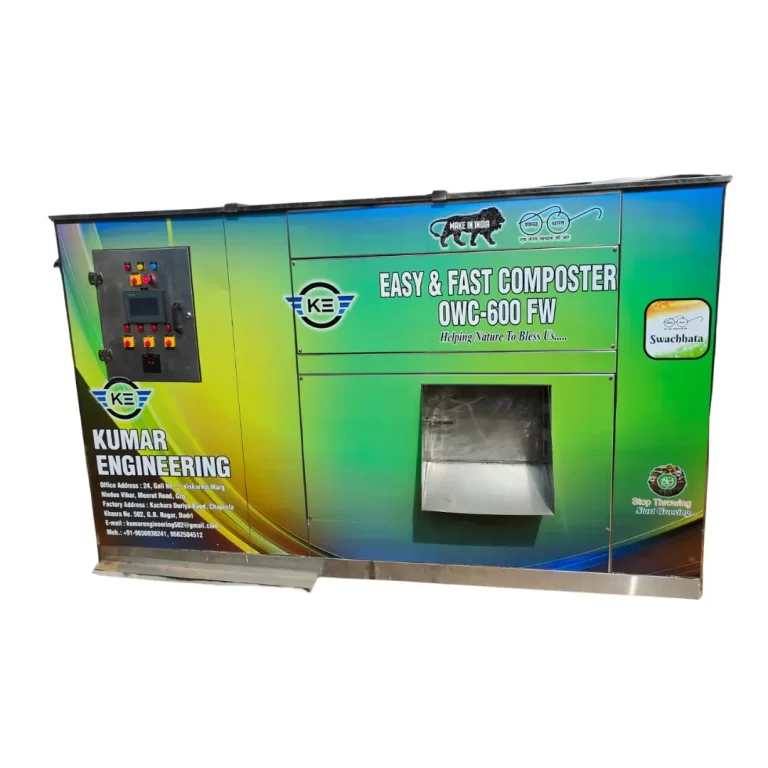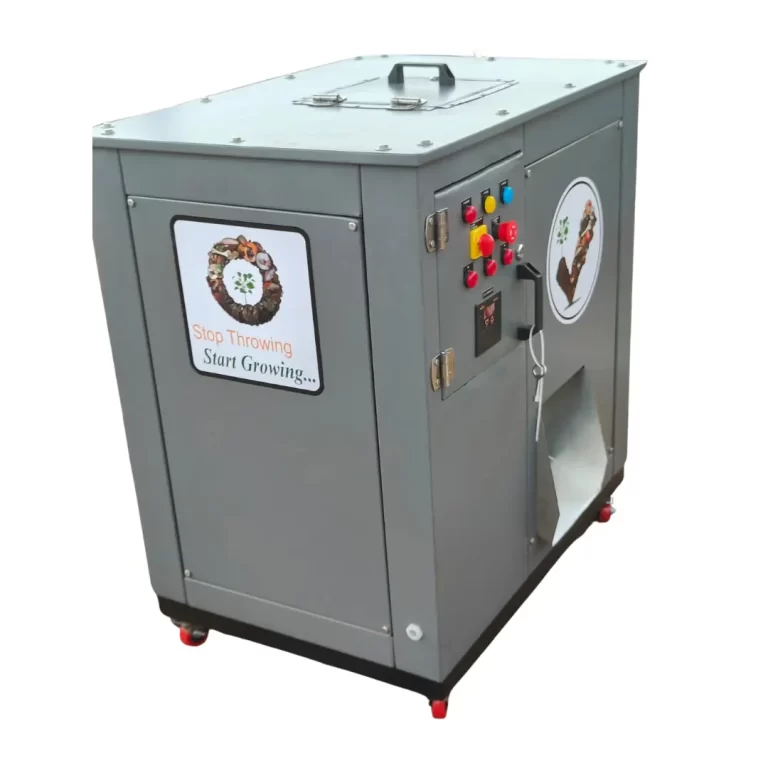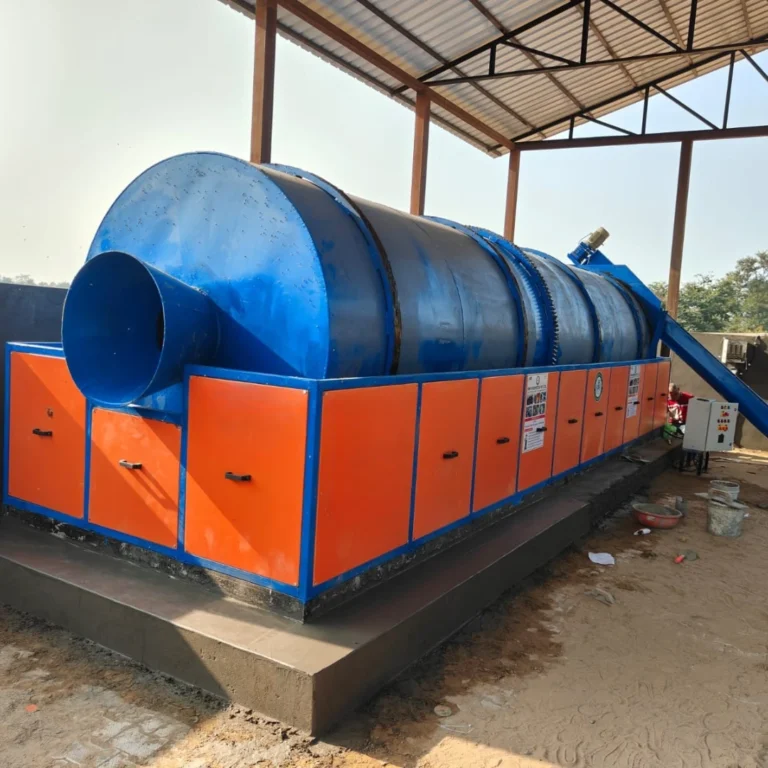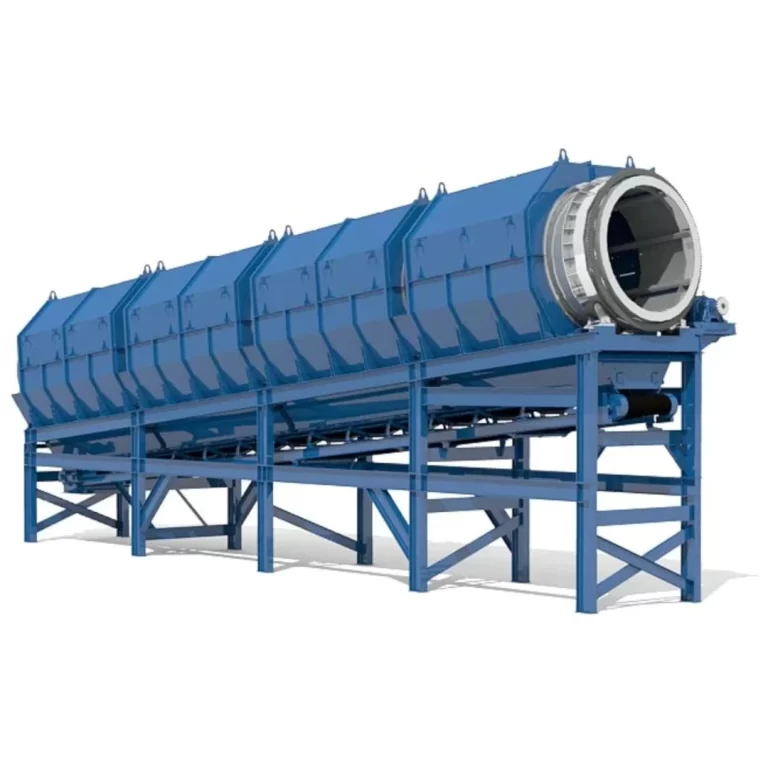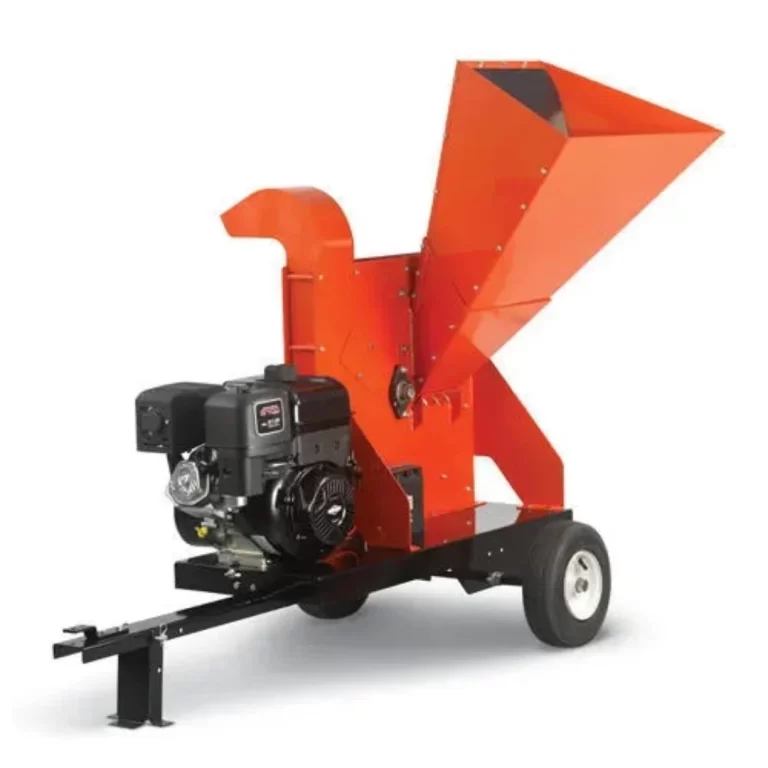
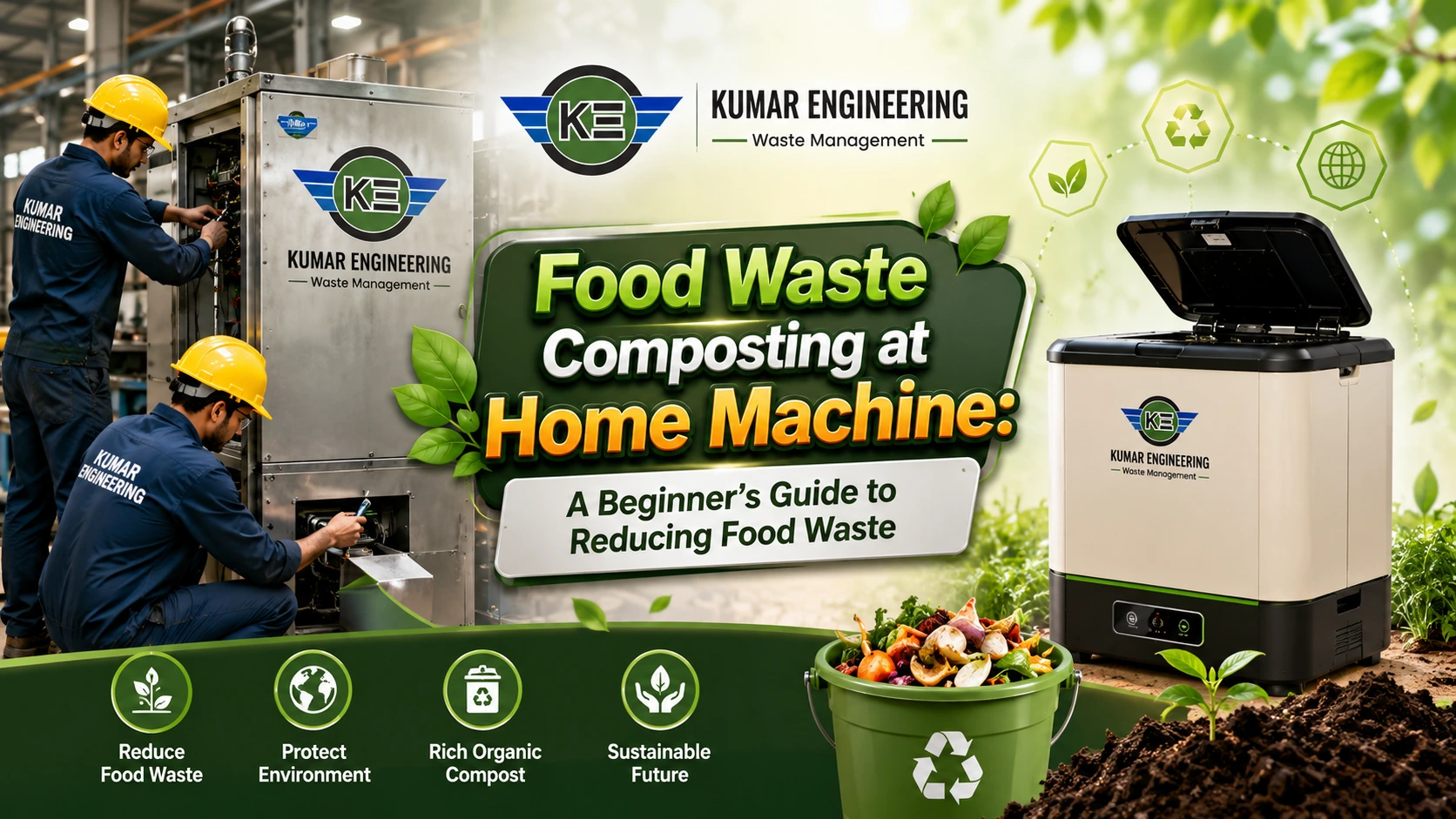
Tons of kitchen waste get added to landfills on a daily basis, resulting in pollution and the emission of greenhouse gases. Rather than discarding the peelings of fruits and vegetables along with other food residues, you can easily convert such residues into compost with the help of a Food Waste Composting at Home Machine. Kitchen composting is one of the simplest and most effective methods of recycling food waste and generating organic fertilizer for gardens.
At Kumar Engineering, we firmly believe that sustainable waste management should begin at home. We offer our cutting-edge kitchen composting systems to enable households, apartment complexes, educational institutions, and small businesses to carry out home composting in an easy and hygienic manner.
What is Food Waste Composting?
Composting of food waste is a natural procedure that involves the decomposition of kitchen waste by microorganisms in order to create compost rich in nutrients. Composting of food waste is beneficial because it makes the soil richer in nutrients and helps plants grow better.
This procedure can be done through the traditional composting heap method or with the help of a composting machine.
How Does Composting Work?
Many people wonder how does composting work. The process is simple:
- Collect biodegradable kitchen waste.
- Add the waste to a composting machine or compost heap.
- Microorganisms naturally decompose the organic material.
- Proper moisture, oxygen, and temperature speed up decomposition.
- Within a few weeks, the waste transforms into nutrient-rich compost.
Modern home composting machines automate this process, making composting faster, cleaner, and odor-free.
How to Compost Food Waste at Home
If you’re wondering how to compost food waste, follow these easy steps:
- Collect vegetable peels, fruit scraps, tea leaves, coffee grounds, and leftover food.
- Avoid adding plastic, glass, metal, or excessively oily foods.
- Place the waste inside a Food Waste Composting Machine.
- Maintain proper moisture and airflow.
- Allow the machine to process the waste.
- Use the finished compost for home gardens, flower pots, and landscaping.
This simple routine helps every family reduce daily waste while creating organic fertilizer.
Why Choose a Food Waste Composting at Home Machine?
Unlike traditional composting methods, modern machines offer several advantages:
- Fast compost production
- Odor-free operation
- Compact and space-saving design
- Easy to use and maintain
- Reduces household waste volume
- Eco-friendly waste management
- Produces high-quality organic compost
- Suitable for homes, apartments, and villas
Composting at Home vs. Traditional Compost Heap
| Composting at Home Machine | Traditional Compost Heap |
|---|---|
| Faster composting process | Takes several months |
| Minimal odor | Can produce unpleasant smells |
| Compact design | Requires outdoor space |
| Easy operation | Needs regular manual turning |
| Hygienic and clean | May attract insects and pests |
Explain Two Positive Environmental Impacts of Composting
If someone asks you to explain two positive environmental impacts of composting, the biggest benefits are:
1. Reduces Landfill Waste
Food waste diverted from landfills decreases methane emissions, helping reduce environmental pollution and supporting cleaner cities.
2. Improves Soil Health
Organic compost enriches soil with nutrients, increases water retention, and reduces the need for chemical fertilizers.
These benefits make composting food waste an environmentally responsible practice for every household.
Best Materials for Composting Food Waste
You can compost:
- Vegetable peels
- Fruit scraps
- Tea leaves
- Coffee grounds
- Eggshells
- Bread pieces
- Rice leftovers
- Garden leaves
- Small food scraps
Avoid composting:
- Plastic
- Glass
- Metal
- Chemicals
- Large bones
- Excessive cooking oil
Benefits of Recycling Food Waste
Choosing to recycle food waste through composting provides numerous benefits:
- Reduces daily household garbage
- Lowers landfill pollution
- Produces natural organic fertilizer
- Supports sustainable living
- Saves waste disposal costs
- Encourages eco-friendly habits
- Improves garden productivity
- Reduces greenhouse gas emissions
Applications of Home Composting Machines
Food Waste Composting Machines are ideal for:
- Residential homes
- Apartments
- Villas
- Schools
- Small offices
- Cafeterias
- Restaurants
- Hotels
- Community parks
- Organic gardens
Food Waste Composting at Home Machine – Technical Specification
| Parameter | Specification |
|---|---|
| Machine Type | Automatic Food Waste Composting Machine |
| Processing Capacity | 5 Kg – 100 Kg/Day (Customizable) |
| Input Material | Kitchen Waste, Vegetable & Fruit Scraps, Food Leftovers |
| Output Product | Nutrient-Rich Organic Compost |
| Composting Time | 24–48 Hours (Model Dependent) |
| Power Requirement | 220V/415V, 50 Hz |
| Operation Mode | Fully Automatic / Semi-Automatic |
| Material of Construction | Stainless Steel (SS 304) |
| Mixing System | Automatic Agitator with Continuous Mixing |
| Odor Control | Inbuilt Bio Filter & Ventilation System |
| Temperature Control | Automatic Digital Temperature Monitoring |
| Moisture Control | Intelligent Moisture Management |
| Safety Features | Overload Protection & Emergency Stop |
| Installation Area | Indoor & Outdoor Applications |
| Applications | Homes, Apartments, Schools, Hotels, Restaurants & Cafeterias |
| Maintenance | Low Maintenance & Easy Cleaning |
| Compost Quality | Eco-Friendly, Organic & Ready-to-Use Fertilizer |
| Machine Life | Long Service Life with Corrosion-Resistant Body |
Working Process of Food Waste Composting at Home Machine
Step 1: Collect Food Waste
Gather biodegradable kitchen waste such as vegetable peels, fruit scraps, tea leaves, coffee grounds, eggshells, and leftover food. Avoid adding plastic, glass, metal, or excessive oily food.
Step 2: Load the Machine
Open the composting machine and place the collected food waste inside the chamber. Ensure the waste is evenly distributed for efficient processing.
Step 3: Microbial Decomposition
The machine uses beneficial microorganisms, controlled temperature, moisture, and oxygen to accelerate the natural decomposition process.
Step 4: Mixing & Aeration
The internal mixing system continuously stirs the waste, allowing proper airflow and faster breakdown while preventing bad odors.
Step 5: Moisture & Temperature Control
The machine automatically maintains the ideal moisture and temperature levels required for effective composting, ensuring consistent performance.
Step 6: Compost Formation
Within a few days (depending on the machine capacity and waste type), the organic waste is converted into nutrient-rich compost.
Step 7: Collect the Compost
Remove the finished compost from the machine and use it as an organic fertilizer for home gardens, flower pots, farms, lawns, and landscaping.
Step 8: Repeat the Process
Continue adding fresh kitchen waste daily to maintain a sustainable cycle of food waste composting, reducing household waste while producing eco-friendly compost.
FAQs – Food Waste Composting at Home Machine
1. What is a Food Waste Composting at Home Machine?
A Food Waste Composting at Home Machine is an eco-friendly device that converts kitchen waste into nutrient-rich organic compost using natural microorganisms and controlled composting technology.
2. How does composting work in a home composting machine?
The machine decomposes food waste by maintaining the ideal temperature, moisture, and airflow. Beneficial microbes break down organic waste and convert it into high-quality compost within a short period.
3. What types of food waste can be composted?
You can compost vegetable peels, fruit scraps, tea leaves, coffee grounds, eggshells, leftover cooked food, bread, and other biodegradable kitchen waste. Avoid plastic, glass, metal, and excessive oily food.
4. How long does it take to convert food waste into compost?
Depending on the machine model and waste type, composting generally takes 24 to 48 hours, making it much faster than traditional compost heaps.
5. Does the machine produce bad odors?
No. Modern Food Waste Composting Machines include odor-control systems and proper ventilation, ensuring a clean and hygienic composting process.
6. Is the compost safe for plants?
Yes. The compost produced is rich in organic nutrients and is completely safe for home gardens, flower pots, farms, lawns, and landscaping.
7. Who can use a Food Waste Composting Machine?
These machines are suitable for homes, apartments, schools, restaurants, hotels, offices, hospitals, and residential societies looking to reduce food waste sustainably.
8. Why choose Kumar Engineering for Food Waste Composting Machines?
Kumar Engineering offers high-quality, energy-efficient, and durable Food Waste Composting Machines designed for reliable performance, easy operation, low maintenance, and environmentally responsible waste management solutions.
Why Choose Kumar Engineering?
Where reliability and sustainability of Food Waste Composting at Home Machines are concerned, the reputation of Kumar Engineering is second to none in the field of providing innovative waste management machines. As an organization that has been involved in engineering for many years with quality at its core, we specialize in manufacturing of efficient, reliable, and simple-to-operate composting machines. We aim at providing efficient disposal options for food waste for homes, offices, institutions, and other commercial establishments.
All our machines have been built from premium-grade materials and are fitted with advanced technology that ensures fast decomposition and odorless production of high-quality compost. We provide both home-based and large-scale commercial machines, depending on our customers’ needs.
Why Customers Trust Kumar Engineering
- Advanced Composting Technology for faster and more efficient waste conversion.
- Premium Stainless Steel Construction (SS 304) for corrosion resistance and long service life.
- Energy-Efficient Design that minimizes electricity consumption while maximizing performance.
- Odor-Free & Hygienic Operation with an advanced ventilation and bio-filter system.
- Fully Automatic & User-Friendly Controls for simple, hassle-free operation.
- High-Quality Organic Compost Output suitable for gardens, landscaping, and agriculture.
- Custom Capacity Options available for homes, apartments, schools, hotels, restaurants, and industries.
- Low Maintenance & Easy Cleaning to reduce operating costs.
- Strict Quality Testing to ensure reliable performance and durability.
- Timely Delivery & Professional Installation across India.
- Dedicated After-Sales Support including maintenance guidance and technical assistance.
- Environment-Friendly Solutions that help reduce landfill waste and promote sustainable living.
- Competitive Pricing without compromising on quality or performance.
- Experienced Engineering Team committed to continuous innovation and customer satisfaction.
Kumar Engineering not only manufactures composting machines; we offer comprehensive waste management solutions to assist our clients in reducing food waste, recycling organic waste effectively, and producing nutritious compost. The quality of our composting machinery, coupled with customer support and innovation, makes us the top choice when it comes to acquiring the best composting machines available. By investing in Kumar Engineering, you are buying into a robust, performance-driven, and environmentally-friendly solution.
Conclusion
The Food Waste Composting at Home Machine is an excellent choice for people who want to cut down on food waste and make the world a better place. Knowing how does composting works, learning how to do food waste composting, and doing composting at home are some of the ways that will help you cut down on landfills and make organic and nutritious compost for your plants. No matter which way you decide to go, be it a conventional heap or a new composting machine, food waste composting is one of the best choices when it comes to food waste recycling.